
When Imagination Became Infrastructure
What the Dubai Future Forum (2025) revealed about building futures together

Introduction — Listening for the Deeper Shifts
The Dubai Future Forum 2025 opened with a deceptively simple provocation: tracking events is not enough; the real work is learning how to listen for what is quietly changing beneath them. This framing set the tone for the days that followed. The Forum’s theme, National Cognitive Potential, invited us to think of progress not in terms of output or scale alone, but through the quality of attention, relationships, and collective sense-making that societies are able to sustain.
As a Nigerian futurist and APF Emerging Fellow working at the intersection of narrative, governance, and housing futures, this framing felt immediately relevant. What happens when imagination becomes a civic capacity rather than a private talent? What kinds of futures become possible when attention is treated as infrastructure?
This reflection does not attempt to catalogue the Forum. Instead, it traces the ideas, moments, and encounters that subtly reoriented how I think about futures work.
Three Shifts That Framed the Forum
Early on, three shifts were named as shaping the decade ahead.
First, focus is becoming a scarce and valuable resource. In a fragmented world, the ability to sustain attention may matter as much as technological capability.
Second, expertise is both everywhere and nowhere. Knowledge is increasingly distributed, contested, and contextual, demanding synthesis rather than certainty.
Third, our relationship with technology is becoming emotional, not merely functional. As AI reshapes companionship, creativity, and trust, the social implications extend far beyond efficiency.
These ideas did not function as conclusions. They served as lenses through which the rest of the Forum could be read.
Relearning Imagination
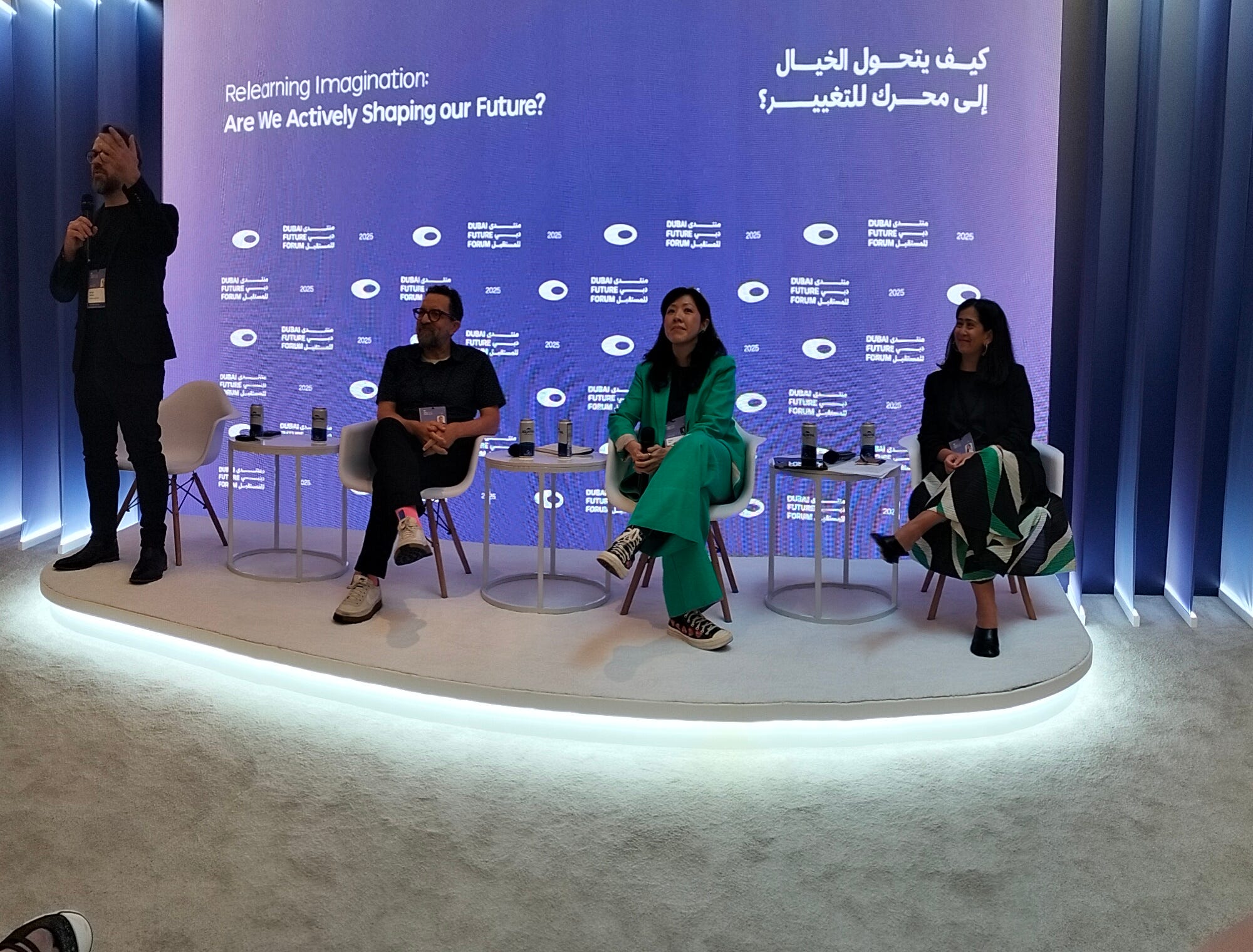
One of the most formative sessions I attended focused on imagination, not as a poetic add-on to strategy, but as a disciplined practice. The workshop quietly challenged the assumption that imagination is either intuitive or personal. Instead, it suggested that imagination can be cultivated, shared, and structured.
What stayed with me was the notion that imagining is already a form of making — an early rehearsal of futures before they harden into reality. When imagination moves through cycles of inspiration, practice, and interaction, it becomes less about individual creativity and more about collective capability.
A single line captured the balance the session called for: imagine like children, decide like adults. It pointed to a way of working that preserves openness without abandoning responsibility.
There was also a brief introduction to a collective listening practice, reminding us that emotional alignment and shared presence are not distractions from futures work, but conditions that make it possible.
Play as a Futures Method
Another session reinforced a complementary insight: play can be a serious tool. Through a deceptively simple, game-based approach to scenario creation, participants were invited to step into futures that would have been difficult to reach through linear analysis or conventional forecasting alone. The exercise did not ask for expertise so much as presence, curiosity, and a willingness to suspend certainty.
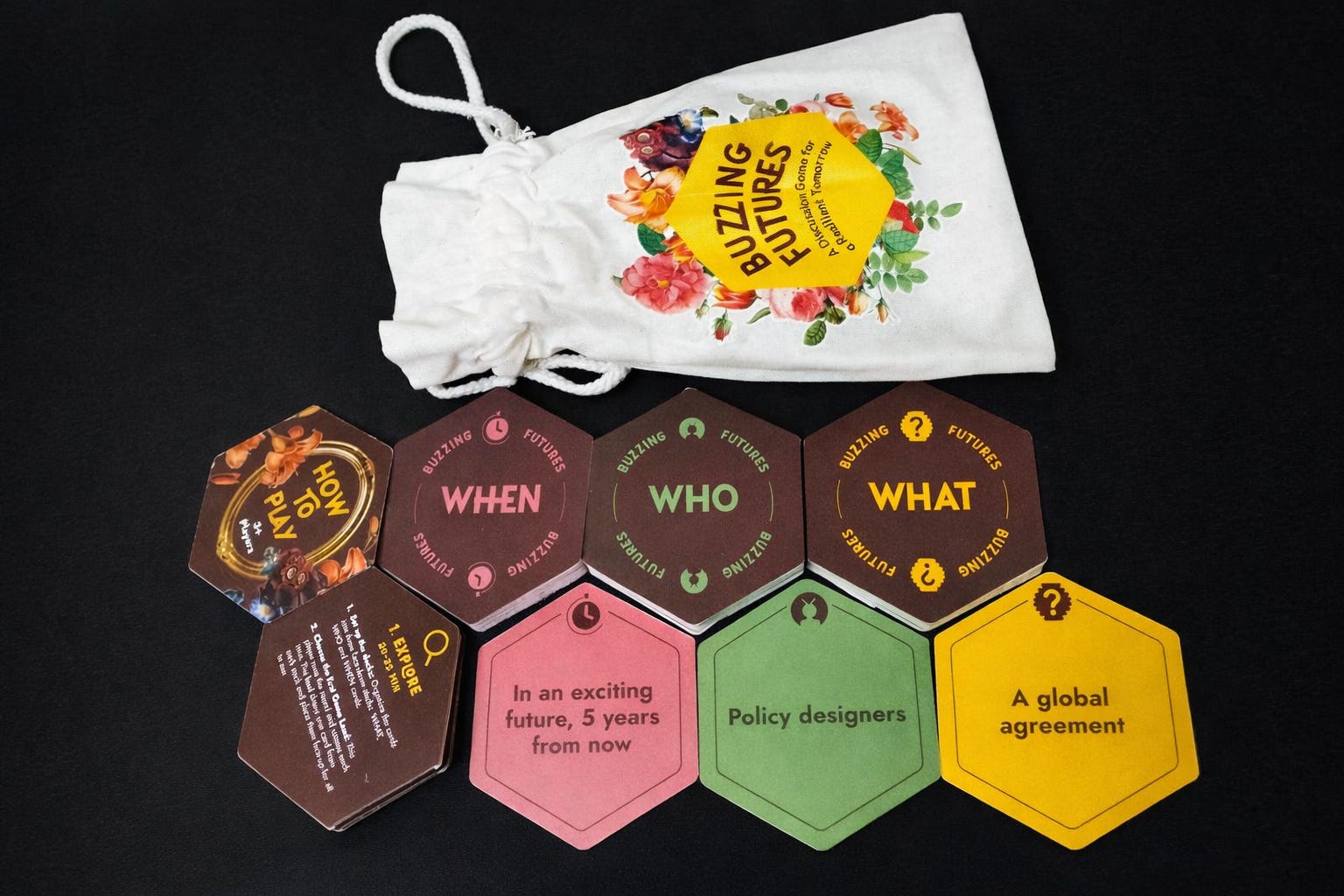
What struck me most was not the novelty of the method, but its accessibility. Play lowered the stakes. It softened hierarchies, loosened the grip of “right answers,” and allowed people to explore unfamiliar possibilities without the pressure of performance. In that space, unexpected connections surfaced — not because they were forced, but because the conditions allowed them to emerge.
The session quietly suggested that futures work does not have to remain confined to expert rooms and elite institutions. When designed with care, play can become a bridge — carrying futures thinking into classrooms, communities, and public institutions where imagination is often present but unrecognized as a legitimate form of intelligence.
In contexts like Nigeria, where futures conversations are frequently compressed by urgency, scarcity, and crisis-response thinking, this approach felt quietly radical. It hinted at a way of creating room to think beyond survival, without denying the realities that make such thinking difficult.
Rethinking Humanity and Governance
Two panel conversations lingered with me long after they ended, not because they offered neat solutions, but because they surfaced tensions that feel increasingly unavoidable.
The first explored what it means to build regenerative societies at a time when machines are rapidly surpassing humans in speed, scale, and precision across many domains. Beneath discussions of capital, innovation, and systems design was a more unsettling question: how do we redefine human value when productivity, efficiency, and optimization are no longer sufficient anchors?
Several speakers gestured toward qualities that resist automation — care, judgment, creativity, moral responsibility — yet there was an unspoken recognition that naming these qualities is easier than reorganizing economies and institutions around them. The conversation felt less like a conclusion and more like an opening, inviting us to sit with the discomfort of transition rather than rush to replacement narratives.
The second panel turned toward governance across generations. Speakers reflected on how long-term thinking is being woven into policy through youth participation, cultural continuity, and anticipatory frameworks that stretch beyond electoral cycles. A recurring theme was pace. While technology accelerates relentlessly, trust, care, legitimacy, and meaning do not. They accumulate slowly, through relationships and shared stories.
Taken together, these conversations reinforced an idea central to my own work: futures are not only technical problems to be solved. They are moral and narrative questions — shaped by what we choose to value, whose voices we amplify, and which stories we allow to guide collective decision-making.
Futures You Could Walk Through
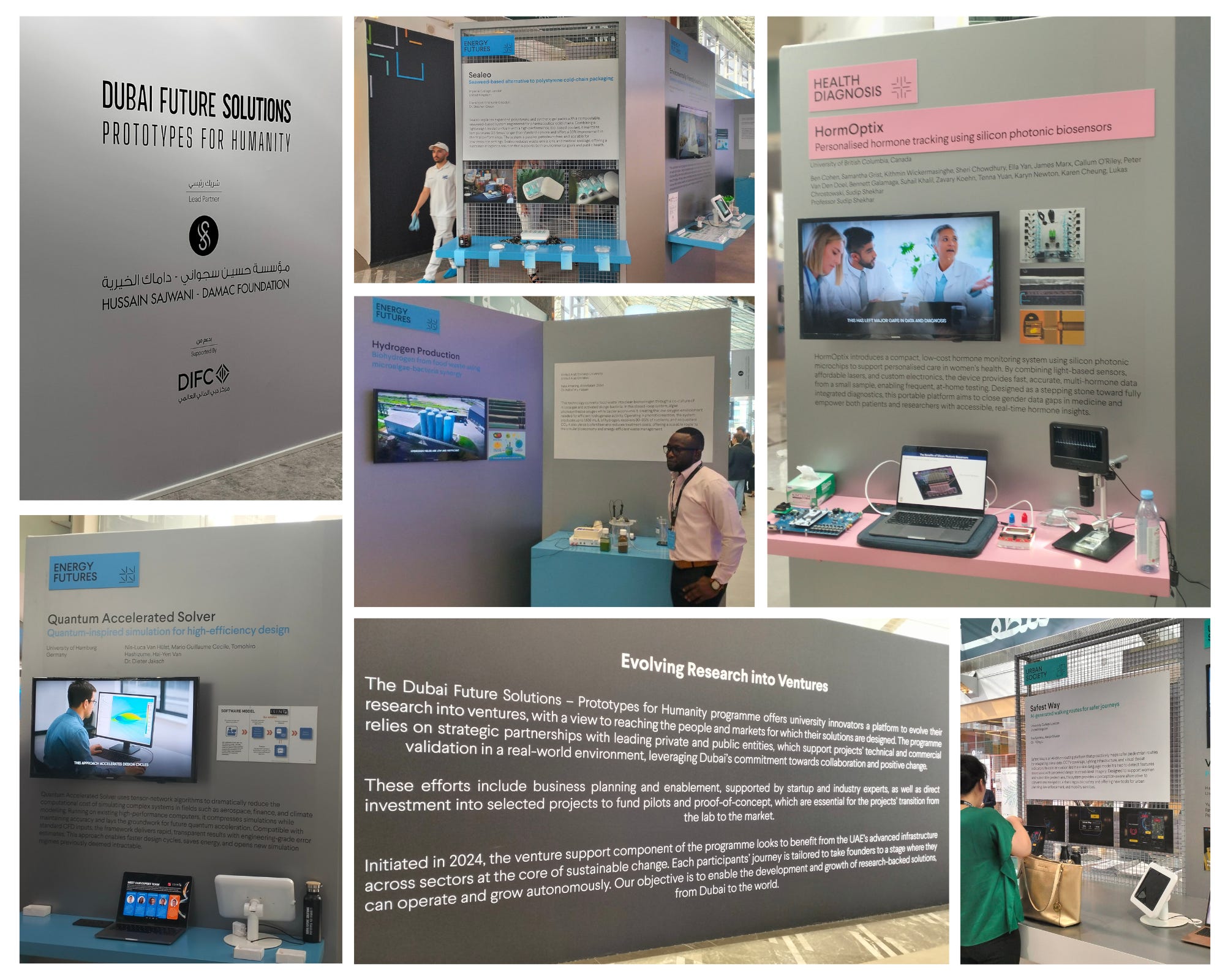
Beyond panels and workshops, the Forum made futures tangible. The Prototypes for Humanity exhibition showcased student-led projects addressing health, mobility, energy, and environmental challenges. What stood out was not just technical ingenuity, but ethical sensitivity — a signal that emerging innovators are thinking systemically from the start.
‘The Art of Change’ virtual reality installation offered a more abstract encounter. Through sound and form, it traced a life journey that resisted explanation, relying instead on feeling. In a space filled with frameworks and forecasts, this reminder — that emotion is also a form of data — felt grounding.
Books, Conversations, and Quiet Exchanges
Some of the most generative moments happened between sessions. Conversations with authors and practitioners offered glimpses into different approaches to collaboration, synthesis, and applied foresight. These exchanges reinforced a simple truth: stories are tools. They help us navigate difference, hold complexity, and act without false certainty.
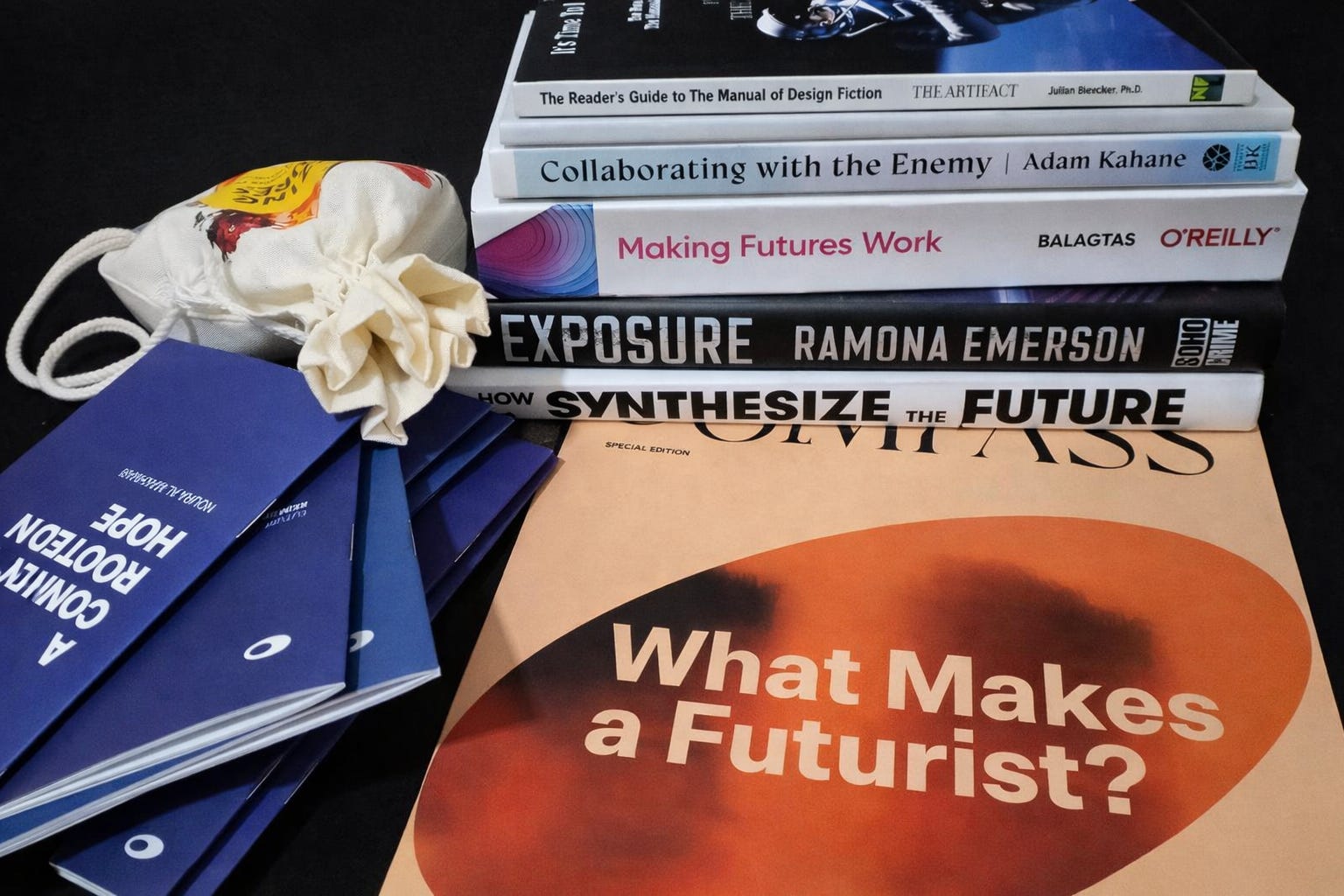
Equally important were informal conversations with fellow futurists. There was no single path into the field, only a shared willingness to sit with uncertainty and imagine alternatives.
Signals Beneath the Surface
Looking across the Forum, a few patterns emerged quietly:
The boundaries between art, science, and policy are thinning.
Narrative is becoming a formal instrument in futures work.
Young people are shaping governance, not waiting to inherit it.
Collective intelligence is increasingly valued over individual expertise.
These are not trends to be celebrated uncritically, but signals worth paying attention to.
Narrative Futures and My Own Practice
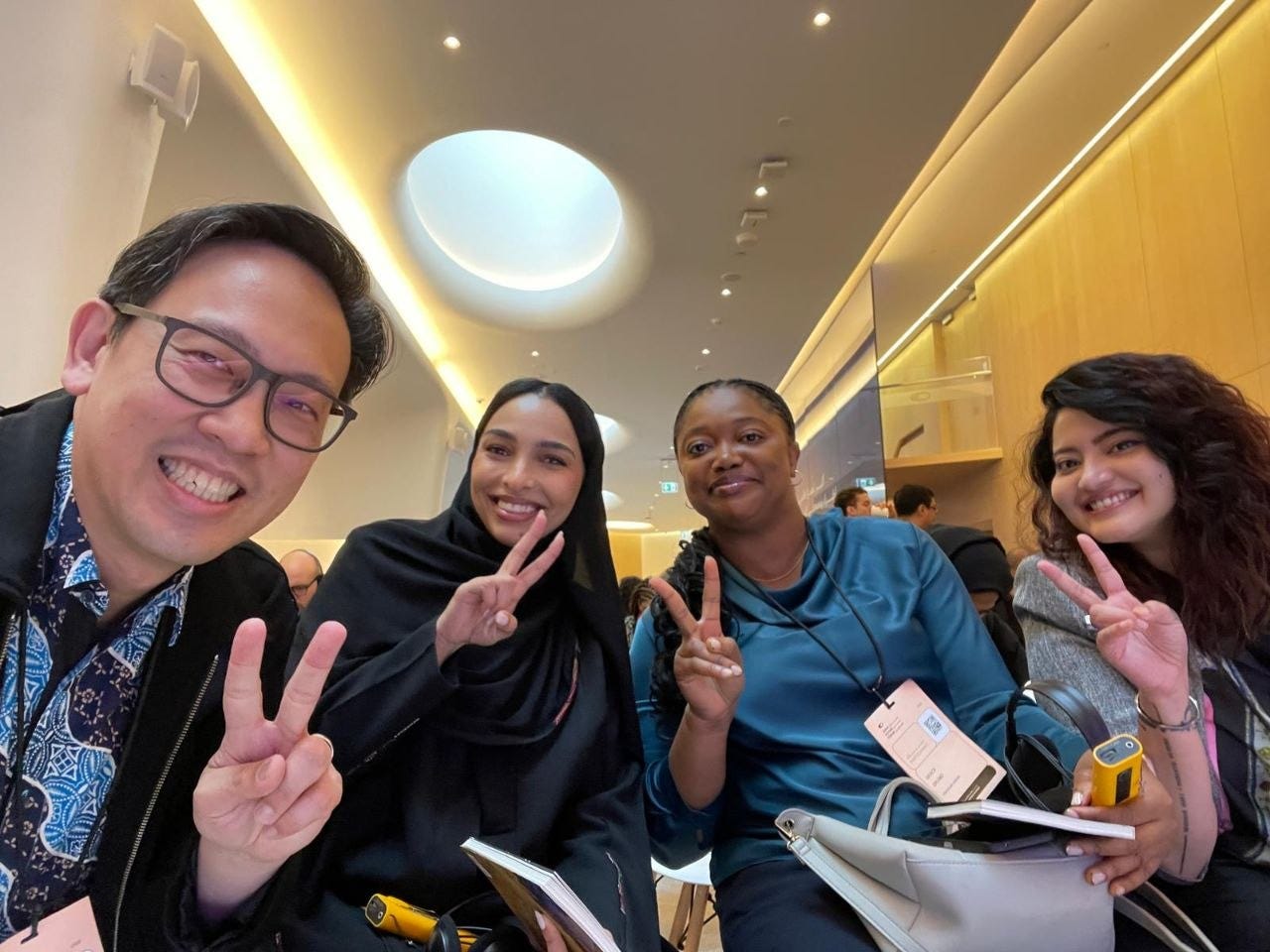
My APF Emerging Fellows work explores how fiction and narrative can inform housing and governance futures. DFF reinforced the idea that stories are not ornamental; they shape what societies are able to imagine and therefore what they can build.
Exposure to diverse methods and disciplines expanded the narrative vocabulary I bring to this work. It also sharpened a conviction I carry home: African futures must be imagined with depth, plurality, and cultural grounding.
Conclusion — Attention as a Civic Practice
One of the closing reflections at the Forum returned to a simple idea: attention shapes care. What we choose to notice determines what we value, protect, and design for.
Leaving the Forum, I carried a heightened sensitivity to the quieter signals shaping our shared futures — and a renewed commitment to cultivating imagination, not as escape, but as responsibility.
If the future belongs to those who can listen well, then imagination, attention, and care may be among the most important skills we have yet to fully take seriously.